
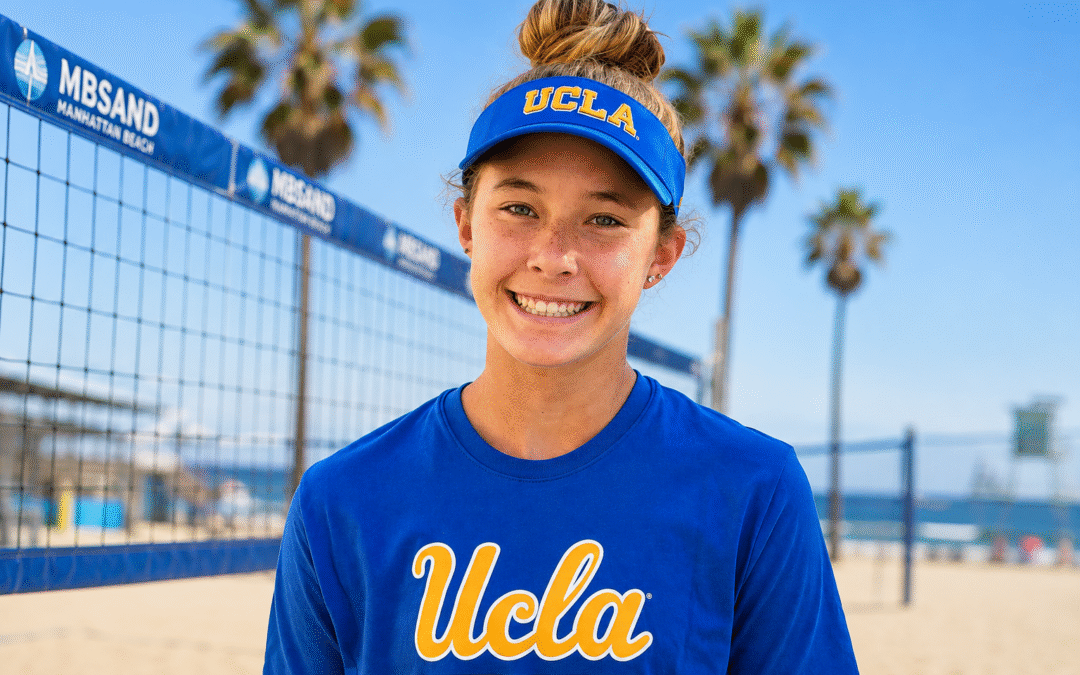
If you’re a parent and have just begun hearing the term “recruiting” thrown around at tournaments, you’re probably wondering if that’s applicable to your child or if it’s just restricted to the top few. Fair question. The truth is that beach volleyball is different from a lot of other sports, and knowing how it works can save your family from a lot of confusion.
Why Beach Volleyball Recruiting Is Different
Beach volleyball is an incredibly youthful NCAA sport. It was only officially recognized as an NCAA championship sport in 2015, so the pool of players who have experience hasn’t been able to keep pace with the number of teams looking for roster players. The number of schools that are adding beach volleyball each year is increasing, and a lot are actively seeking players who started out playing indoor volleyball but who haven’t had the opportunity to spend long hours on the sand.
It’s actually a good thing for families living in the South Bay. Because a lot of the talent in sports has historically come from Southern California beaches, coaches here have an advantage that the rest of the country does not have.
What College Coaches Are Actually Looking For
It’s not only about how hard someone could hit. College coaches usually take into consideration a few things:
- Fundamentals of controlling a ball: the passing of balls and setting them on sand, which requires a different set of skills from indoor
- Movement and athleticism: how a player moves across the court, not the height they have
- Experience in tournaments: has this player played under real pressure with real-life opponents?
- Coachability: can they receive feedback and adjust the match?
It’s important to note that height isn’t at the top of the list. Beach volleyball encourages the control of the ball and court awareness in an approach that allows for more athletes than most people think.
When Should Recruiting Actually Start?
It is a frequently asked question parents ask their children, and the truth is earlier than people think however, not enough to make it stressful.
The most serious conversations about recruiting begin around the sophomore year in high school as college coaches are able to begin reaching out directly according to NCAA rules. However, the foundation for the conversation starts years earlier, typically beginning around the age of 12 or 13 when players start regularly training and participating in tournaments for clubs that are noticed by recruiters.
| Stage | Typical Age | What’s Happening |
| Foundation building | 10-13 | Learning fundamentals, playing recreationally and in local tournaments |
| Competitive exposure | 13-15 | Regular tournament play, building a track record, getting on recruiters’ radar |
| Active recruiting | 15-17 | Direct contact with college coaches, camps, official visits |
| Commitment | 17-18 | Signing with a program |
The training program at MBsand is built around this exact pattern; that’s the reason why it has produced 56 D1 recruits. The coaching isn’t only focused on winning next year’s tournaments, but rather developing the type of player that a college coach would like to have on their roster in three years.
Does My Kid Have to Play Club Beach Volleyball to Get Recruited?
It’s not a requirement; however, it can make things much easier. College coaches are able to recruit heavily from club tournaments as they’re the ones who can see an array of players compete in a brief time. A well-run club program implies regular coaching, more time on sand and, equally important, an instructor who understands the process of recruiting and can guide families through it.
This is where many parents are surprised. The process of recruiting doesn’t just revolve around the talent. It’s also about timing, visibility and knowing which events are important. A good coach for clubs handles many of these things behind the scenes.
What Makes MBsand’s Track Record Different
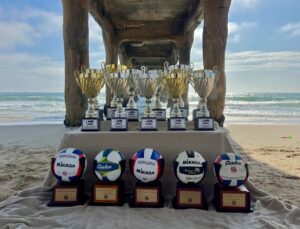
MBsand’s BVCA National Championship trophies displayed at the Manhattan Beach Pier
MBsand was created by amalgamating the Dodd Volleyball School with the Manhattan Beach Volleyball Club, and the coaching staff has experience in recruiting that is above and beyond the normal club experiences:
- Patty Dodd: Beach Volleyball Hall of Famer, former UCLA All-American, two-time MLV Champion
- Mike Dodd: Olympic silver medalist, 75-time AVP Open winner
- Fernando Sabla: Director of MBsand South, running programs in Long Beach and Huntington Beach
Between them, the coaching staff has sixteen BVCA National Championships as well as more than 4000 youth medals. That’s the number of MBsand players who have been able to play beach volleyball in Division 1.
What Parents Can Do to Support the Process
A few things do change the needle here:
- Begin conversations with coaches in the early stages even if college seems a long way away. Coaches may detect when a player is gaining recruiting-level abilities
- The tournament is prioritized after a player has been prepared, as that’s when visibility happens.
- Keep your grades on track; NCAA eligibility requirements are in the same way as athletic abilities
- Don’t overdo it; putting an 11-year-old into recruitment mode too early can backfire. Let the basics come first.
Ready to Build the Foundation?
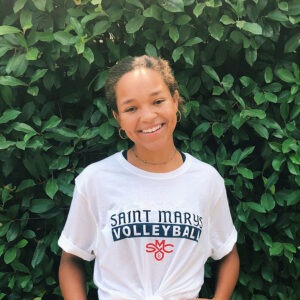
MBsand player Karmin Brown after committing to Saint Mary’s College
No matter if your child’s just beginning to learn or is already playing at tournaments, the pathway to college selection begins with a solid foundation — which we cover in our comprehensive guide to beach volleyball classes in Manhattan Beach. If you’re unsure if it is the best time to begin your journey, our guide on what age children should begin play in beach volleyball is the best place to start.
Sign up to try a trial session at MBsand Manhattan Beach –
Frequently Asked Questions
How many players from MBsand have been enlisted for Division 1 programs?
MBsand has sent 56 players to Division 1 beach volleyball programs, with instruction conducted by Beach Volleyball Hall of Famer Patty Dodd.
What is the best age at which my child can start to be a part of beach volleyball?
Most players start developing their fundamentals between the ages of 10-13, with exposure to tournaments beginning between 13-15, and direct contact with recruits typically beginning in the second year in high school.
Do college coaches hire players who played only indoor volleyball?
Yes. Since beach volleyball is an emerging NCAA sport, a lot of programs actively seek out talented indoor players eager to learn sand-based abilities.
Does my child need to play club volleyball to be considered for a scholarship?
It’s not required however, club tournaments are the most visible for recruiting and a seasoned coaching staff can guide the process.
Where can MBsand be found?
MBsand trains players in Manhattan Beach, with additional locations in Long Beach and Huntington Beach via MBsand South.
Are you unsure regarding your child’s recruitment path? Reach out to MBsand Director Patty Dodd at (310) 227-6628 or mbsandvbc@gmail.com.


Recent Comments